Understanding the Versatility and Application of Brush Letter D in Modern Design
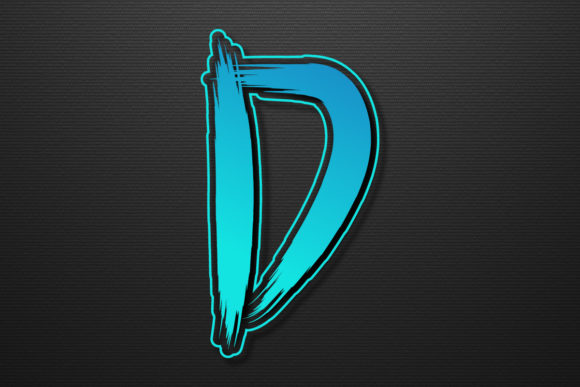
In the realm of digital typography and graphic design, the distinction between standard fonts and hand-crafted lettering can significantly impact the perceived value of a project. Brush Letter D represents a specific intersection where traditional calligraphy meets modern vector technology. This character is not merely a typed glyph but a hand-drawn illustration that has been meticulously converted into a scalable vector file. For designers, marketers, and content creators, understanding the nuances of this asset is crucial for making informed decisions about visual identity.
The appeal of Brush Letter D lies in its organic imperfections. Unlike rigid, geometric sans-serif typefaces, a brush letter captures the pressure, flow, and texture of a physical brush moving across paper. When this aesthetic is preserved in a vector format, it offers users the best of both worlds: the authentic, human touch of hand-lettering and the technical flexibility required for professional digital production. This combination makes it a compelling choice for projects requiring a personal, approachable, or artisanal tone.
The Distinct Advantages of Vector-Based Hand Lettering
When evaluating design assets, the file format is often as important as the visual style. A raster image (such as a JPEG or PNG) of a brush letter is limited by its resolution. If you enlarge it beyond its original dimensions, it becomes pixelated and blurry. In contrast, Brush Letter D being available as a vector file means it is defined by mathematical paths rather than pixels. This allows the letter to be scaled infinitely without any loss of quality.
This technical advantage opens up a wide range of applications. You can use this single asset for a small social media icon, a business card, a large-format banner, or even vehicle wraps. The consistency remains sharp regardless of the output size. Furthermore, vector files are typically smaller in file size compared to high-resolution raster images, which can improve website loading times and ease email attachments.
Beyond scalability, vector formats offer extensive editability. Designers can easily adjust the color palette to match brand guidelines, modify the stroke width, or integrate the letter into complex compositions. This level of control is essential for professionals who need to maintain strict brand consistency while utilizing unique typographic elements.
Comparing Brush Styles with Standard Typography
To determine if Brush Letter D is the right choice for your project, it is helpful to compare it with standard typographic options. Traditional fonts are designed for readability and uniformity. They are ideal for long-form text, legal documents, or corporate reports where clarity and neutrality are paramount. However, they often lack emotional resonance.
Brush lettering, on the other hand, conveys movement and energy. It suggests creativity, warmth, and authenticity. When you choose a hand-drawn element like Brush Letter D, you are signaling to your audience that there is a human element behind the brand or message. This is particularly effective in industries such as wellness, crafts, food and beverage, and lifestyle blogging, where connection and trust are key drivers of engagement.
It is important to note that brush letters are generally not suitable for body text. Their decorative nature can reduce legibility when used in paragraphs. Therefore, they are best utilized as display elements—headlines, logos, monograms, or accent pieces. Understanding this limitation helps prevent misuse and ensures that the design remains functional as well as aesthetically pleasing.
Evaluating Use Cases and Practical Applications
The versatility of Brush Letter D allows it to fit seamlessly into various creative contexts. Here are several practical scenarios where this asset adds significant value:
- Brand Identity and Logos: For startups or small businesses wanting to establish a friendly and approachable image, incorporating a custom brush letter into a logo can create a memorable visual anchor. The uniqueness of a hand-drawn style helps differentiate the brand from competitors using generic template fonts.
- Social Media Graphics: In the crowded landscape of Instagram and Pinterest, eye-catching typography stands out. Using Brush Letter D as a focal point in quote graphics, promotional posts, or story highlights can increase engagement rates by adding visual interest.
- Packaging Design: Artisanal products, such as handmade soaps, organic foods, or craft beers, benefit from packaging that reflects their handmade nature. A vector brush letter can be printed clearly on labels, boxes, and tags, reinforcing the product’s quality and origin.
- Wedding and Event Stationery: The elegance and fluidity of brush lettering make it a popular choice for invitations, save-the-dates, and place cards. The vector format ensures that the printing process yields crisp edges, whether on delicate paper or large signage.
Tradeoffs and Limitations to Consider
While Brush Letter D offers numerous benefits, it is not a universal solution. Designers must weigh certain tradeoffs before integrating it into their workflow. One primary consideration is compatibility with existing brand systems. If a company already has a strict, minimalist, or corporate brand guide, a loose, expressive brush letter might clash with the established visual language. In such cases, it may be necessary to commission a custom font that mimics the brush style but maintains greater uniformity.
Another factor is the learning curve associated with vector editing. While the file is ready to use, maximizing its potential requires familiarity with software like Adobe Illustrator, Affinity Designer, or Inkscape. Users who are only comfortable with drag-and-drop design tools may find the initial setup more challenging than using a pre-made raster image. However, many online platforms now support SVG uploads, mitigating this issue for non-professionals.
Additionally, overuse of decorative typography can lead to visual clutter. If every element of a design uses a brush style, the hierarchy becomes unclear, and the message gets lost. It is crucial to use Brush Letter D sparingly, allowing it to serve as an accent rather than the dominant feature in complex layouts.
Making an Informed Decision
Choosing between Brush Letter D and other design resources depends on your specific goals, audience, and technical capabilities. If your objective is to convey professionalism, authority, and neutrality, a standard serif or sans-serif typeface may be more appropriate. However, if you aim to evoke creativity, warmth, and individuality, a hand-drawn vector letter provides a powerful tool.
Consider the following questions to guide your decision:
- What is the emotional tone of my project? Does it require a human, handmade feel, or a clean, corporate look?
- Where will the design be displayed? Will it need to scale across various sizes, from mobile screens to billboards? If so, the vector format is essential.
- Do I have the technical skills to edit vector files? If not, are there simpler alternatives that still meet my aesthetic needs?
- How does this element fit into the overall composition? Will it enhance readability and visual interest, or will it distract from the core message?
Ultimately, Brush Letter D is a valuable resource for those seeking to add a touch of authenticity and artistic flair to their designs. Its hand-drawn origin ensures uniqueness, while its vector foundation guarantees practicality and professionalism. By understanding its strengths and limitations, you can leverage this asset effectively to create compelling, high-quality visual content that resonates with your audience.
For further exploration of typography trends and vector resources, consider reviewing industry blogs and design communities. These platforms often provide tutorials on integrating hand-lettered elements into digital workflows, helping you refine your skills and expand your creative toolkit. Remember, the best design choices are those that align with your strategic objectives while enhancing the user experience.